Why Rewards Beat Punishment For Children With ADHD (2026)
Children with ADHD don't respond to consequences the way most parenting books say they should. Positive reinforcement, when delivered quickly and consistently, is the single most effective tool for shaping behavior in kids with ADHD. Punishment? It almost never sticks. CHADD's 2024 behavioral guide puts it bluntly: rewards work if they're fast and frequent, while punishment is largely ineffective for this population. That gap between what works and what most families default to is where almost every discipline problem starts.
The reason comes down to brain wiring. A landmark NIMH study found that cortical development in children with ADHD lags roughly three years behind their neurotypical peers, with the biggest delays showing up in the prefrontal cortex. That's the part of the brain responsible for impulse control, planning, and connecting an action today with a consequence tomorrow. Dr. Russell Barkley's widely cited "30% rule" puts it in practical terms: a 10-year-old with ADHD may function more like a 7-year-old when it comes to executive skills. Expecting adult-level cause-and-effect reasoning from a brain that hasn't caught up yet is a setup for frustration on both sides.

How Should You Reward a Child with ADHD?
Start with speed. Brain imaging research published in Cell in December 2025 confirmed that ADHD medications work primarily on reward and alertness networks, not attention directly. That finding reinforces what coaches and parents already see on the ground: the ADHD brain runs on immediate dopamine feedback. A reward delivered 30 seconds after the behavior lands. A reward promised for Friday? Might as well not exist.
Give rewards based on effort, not just results. A child who worked hard to stay seated for five minutes deserves recognition even if they didn't make it to ten. Over-praising easy wins can actually backfire, killing motivation because the child knows they didn't earn it.
Once a new behavior takes hold, pull back the reward frequency slowly. This is the step most parents skip, and it's the one that matters most. If you cut rewards cold, the behavior collapses. Fade gradually and watch closely for signs the child is losing motivation. I've seen families undo months of progress in a single week by stopping reinforcement too fast.
Teach kids to reward themselves. Self-praise and internal acknowledgment ("I stuck with that even when it was boring") build the kind of independence that outlasts any sticker chart. Without this step, children with ADHD become dependent on outside feedback to stay on track.

Reward Types That Actually Work
1. Verbal Praise
Examples: Specific, immediate comments ("You started your homework without being asked.")
Why It Works: Fast, flexible, free
Watch Out For: Fades quickly from memory
2. Visual Cues
Examples: Thumbs up, nod, high five
Why It Works: Can be given silently in public settings
Watch Out For: Same memory limitation
3. Tangible Tokens
Examples: Stickers, check marks, point systems
Why It Works: Creates a visible record that the child can revisit
Watch Out For: Can feel like payment if overused, reducing internal motivation
4. Activity Rewards
Examples: Extra screen time, choosing dinner, a trip to the park
Why It Works: Ties effort to the experiences the child values
Watch Out For: Harder to deliver immediately
Why Punishment Backfires for Kids with ADHD
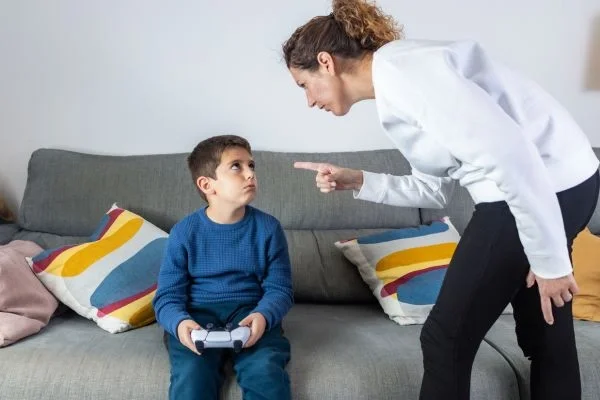
The ADHD brain has a harder time connecting a present punishment to a past behavior. That's not laziness or defiance. It's a performance gap rooted in working memory and time-perception differences. As ADHD behavior specialist Connor Green noted in 2025, ADHD isn't a knowledge problem. These kids know the rules. They struggle to execute what they already understand at the moment.
Mild consequences can sometimes help, but only under very specific conditions. The child needs to see the consequence as minor (not threatening), and there has to be a realistic shot at success. Racing a timer to clean up toys? That can work because it's low stakes and game-like. Racing a timer to finish a math worksheet? That turns into a stress response for most kids with ADHD, making focus worse, not better.
A 2024 study published in PMC (Hulsbosch et al.) found that children with ADHD showed increasing negative emotional responses during punishment tasks, which actually slowed their performance over time. The punishment didn't teach them. It overwhelmed them.
If a child loses a reward they were working toward, don't treat the situation as final. Offer a path back. This is especially true when the child was genuinely trying and got derailed by distraction, not by choice. Helping them refocus on the next opportunity keeps motivation alive.
The bottom line: structure the environment so rewards do the heavy lifting. Save consequences for situations where the stakes are low, and the child has a real chance to course-correct. If you're relying on punishment as your main tool for children with ADHD, you're working against the brain, not with it. And if you're not sure where to start, evidence-based reward strategies paired with coaching from a team that understands behavioral approaches can close the gap between knowing what to do and actually seeing results.
Frequently Asked Questions
How immediate do rewards need to be for children with ADHD?
Within seconds, not minutes. Brain research shows the ADHD dopamine system responds strongest to real-time feedback. A reward delivered even five minutes after the behavior loses most of its power. CHADD's 2024 guide recommends pairing immediate verbal praise with visual cues like stickers or check marks for the best results.
Why don't punishments work for most children with ADHD?
Punishment assumes a child can connect a current consequence to a past action. Children with ADHD have working memory and time-perception differences that make this connection unreliable. A 2024 PMC study found that repeated punishment actually increased negative emotional responses and slowed task performance in kids with ADHD.
What's the best reward system for a child with ADHD?
A mix of verbal praise, visual tokens, and activity-based rewards works better than relying on one type. Use different-colored tokens for different target behaviors so the child links each reward to a specific action. The system should prioritize effort over outcomes to build sustained motivation.
Can rewards backfire or lose effectiveness over time?
Yes. If you use the same reward too often or give it for tasks the child finds easy, it starts to feel like an entitlement rather than a motivator. Vary the rewards, fade the frequency gradually once the behavior is established, and teach self-reward techniques to shift the motivation internally.
How do I fade rewards without losing the behavior gains?
Reduce frequency slowly, not all at once. If you were praising every instance, move to every other instance, then every third. Watch the child's behavior closely during the transition. If motivation drops, step the reinforcement back up temporarily. Dr. Peg Dawson, a leading executive function expert, recommends pairing fading with self-monitoring tools so the child starts tracking their own progress.
Is it ever okay to use consequences for children with ADHD?
Mild consequences can help in low-stakes, short-duration situations where the child is likely to succeed. Racing a timer to put away toys might feel like a fun challenge. But using the same approach for homework or complex tasks typically increases stress and makes focus worse. Always pair any consequence with an opportunity to try again.
Should I discipline my child with ADHD differently from my other kids?
The core principles (clear expectations, consistency, fairness) stay the same. But the delivery has to adjust. Children with ADHD need faster feedback, more frequent reinforcement, and shorter instructions. Dr. Russell Barkley's "30% rule" suggests a 10-year-old with ADHD may function more like a 7-year-old in executive skills, so calibrate your expectations to their developmental level, not their age.