ADHD In Teens: What Every Parent Needs To Know In 2026
ADHD in teens is one of the most common neurodevelopmental conditions affecting adolescents, and it looks nothing like the stereotypical hyperactive kid bouncing off walls. About 15.5% of U.S. adolescents ages 12–17 have received an ADHD diagnosis at some point, according to a 2024 analysis published in the Journal of Clinical Child & Adolescent Psychology. That's roughly 4 million teenagers.
ADHD in teens is a brain-based condition that affects focus, impulse control, and executive function skills like planning, time management, and emotional regulation. It doesn't disappear after childhood. Symptoms shift during adolescence, often becoming less visible but more disruptive to academics, relationships, and long-term independence.
I've worked with families who spent years assuming their kid was "just lazy" or "not trying hard enough." By the time they got a proper evaluation, the damage to their teen's confidence was already done. This article covers what ADHD actually looks like in teenagers, what works for treatment, how much it costs, and where most families go wrong.
We won't be covering adult ADHD or early childhood diagnosis here. Those are different conversations with different decision points.
What Does ADHD Look Like in Teenagers?
Teen ADHD rarely looks like the textbook description parents read about when their child was younger. The hyperactivity usually fades or turns inward (restlessness, racing thoughts, fidgeting). What takes center stage are problems with attention, organization, and emotional control.
A teenager with ADHD might seem perfectly capable one day and completely fall apart the next. That inconsistency is the hallmark, and it's also why so many teens get mislabeled as unmotivated. According to CDC researchers, 58.1% of children with current ADHD have moderate or severe symptoms (Danielson et al., 2024). This isn't mild distraction. It's a real barrier to functioning.

How ADHD Symptoms Shift During Adolescence
Puberty changes the game. Hormonal shifts can make ADHD symptoms more intense, and the gap between what's expected of a teenager and what their brain can manage widens fast. Think of it this way: in elementary school, teachers provide structure. By high school, that structure disappears while the academic workload doubles.
Teens with ADHD commonly deal with poor time management, chronic forgetfulness, difficulty starting tasks, and an inability to prioritize. They know the essay is due Friday. They can't make themselves start it until Thursday night. That's not a character flaw. It's an executive function deficit.
Why Are So Many Teens Being Diagnosed Now?
There's a common misconception that ADHD is being overdiagnosed. The data tells a different story. CHADD (Children and Adults with ADHD) released a statement in June 2025 directly addressing this: diagnosis rates in children have stayed relatively stable, and the overall increase is largely from improved recognition, especially in adults and in girls who were historically missed.
Between 2016 and 2022, roughly 1 million more children received an ADHD diagnosis. But that rise reflects better screening, not an epidemic of false positives. If anything, underdiagnosis remains the bigger problem. CDC data from 2024 shows nearly one-third (30.1%) of kids with current ADHD aren't receiving any treatment at all.

How Does ADHD Affect a Teenager's School Performance?
ADHD is one of the biggest drivers of academic underperformance in teens, and it has nothing to do with intelligence. Teenagers with ADHD tend to score lower on standardized tests, earn lower GPAs, and face higher rates of suspension. Not because they can't do the work, but because the skills required to manage that work are exactly the skills ADHD impairs.
Missing deadlines, losing assignments, bombing tests they studied for (because they studied the wrong material), forgetting to turn in completed homework. I've seen students fail classes not because they couldn't learn the content, but because they couldn't manage the logistics of being a student.
This gets expensive, too. A 2022 study found that excess annual costs per ADHD teen average $8,349, and academic support accounts for nearly half of that total. Families who invest early in executive function coaching and school accommodations tend to see better outcomes than those who wait until high school to intervene.

Can ADHD Change a Teen's Social Life and Friendships?
Yes. About half of adolescents with ADHD experience serious peer relationship problems, according to the Child Mind Institute. They might interrupt constantly, miss social cues, or react to conflict in ways that push people away. Some teens struggle with emotional regulation to the point where small disagreements become full meltdowns.
The social piece is often harder on teens than the academic piece. A bad grade can be retaken. Losing your friend group at 15 leaves a mark. And teens with ADHD are also more likely to be bullied, or to bully others, often because of impulsive behavior they don't fully control.
One thing that actually works: structured extracurricular activities. Sports teams, clubs, theater programs. These give ADHD teens a social setting with built-in rules and expectations, which makes interactions easier to manage than unstructured hanging out.
What About Risky Behavior and Impulse Control?
This is the section parents don't want to read, but it matters. Teens with ADHD are statistically more likely to start using cigarettes, alcohol, and other substances earlier than their peers. They're also more likely to engage in unsafe sexual behavior and to have car accidents.
The driver behind all of this is impulsivity combined with poor consequence awareness. A teenager whose brain doesn't fully weigh the risks of a decision in the moment will make worse decisions. Period. This isn't about bad parenting or weak willpower. It's about how the ADHD brain processes risk.
Driving deserves its own callout. Teens with ADHD are significantly more likely to have traffic violations and accidents. Some families choose to delay getting a license by a year or two, which is a reasonable decision that more parents should consider.
Co-Occurring Conditions: What Else Shows Up With ADHD in Teens?
This might be the most underreported part of teen ADHD. According to 2024 CDC data, 77.9% of children with ADHD have at least one co-occurring condition. That's not a typo. Nearly 8 out of 10 kids with ADHD are dealing with something else, too. The most common co-occurring conditions include anxiety (39.1%), behavior problems (44.1%), and learning disorders like dyslexia.
Depression is also common, and it often gets missed because ADHD symptoms can mask it. A teen who seems disengaged and irritable might be depressed, or they might be frustrated by their ADHD, or both. Getting the right diagnosis (and not just the first diagnosis) makes a big difference in treatment outcomes.
If your teen has an ADHD diagnosis but treatment doesn't seem to be working, push for a broader evaluation. Co-occurring conditions change the treatment plan, and missing them is the most common reason families feel stuck.
Does Screen Time Make Teen ADHD Worse?
The short answer: probably, yes. A January 2026 policy statement from the American Academy of Pediatrics found that greater digital media use is associated with increased ADHD symptoms over time. The relationship goes both ways. Teens with ADHD are drawn to screens because the constant stimulation feels good. And more screen time appears to worsen the attention and impulse control problems they already have.
But here's the contrarian take: blanket screen time bans don't work for ADHD teens and often backfire. The better approach is targeted limits. Remove phones during homework. Set hard boundaries around bedtime screen use (sleep disruption alone worsens ADHD symptoms). And accept that some screen time, especially for social connection, is a normal part of being a teenager.
What Are the Best Treatment Options for Teens With ADHD in 2026?
There's no single best treatment. The right plan depends on your teen's specific symptoms, co-occurring conditions, and daily functioning. But the research is clear that medication alone isn't enough for most teens. CDC data from 2024 shows only 44.4% of kids with current ADHD received behavioral treatment in the past year.
Medication
Stimulant medications (like Adderall and Ritalin) are the most prescribed and most studied. They work fast and can be very effective at reducing core symptoms. But they don't teach skills. A teen who takes medication will focus better in class, but they won't automatically learn how to plan a project, manage their time, or break large tasks into smaller steps.
The question parents should ask isn't "should my teen take medication?" It's "what are we doing alongside medication?" Because skills-based support is where the long-term payoff lives.

Executive Function Coaching
This is where I've seen the biggest returns for families. Executive function coaching teaches the organizational, planning, and self-regulation skills that ADHD impairs. Unlike tutoring (which focuses on subject-matter help), coaching builds the systems and habits that make a student self-sufficient.
A good coach helps your teen build routines for homework, break projects into steps, use planners and reminders, and reduce procrastination. The skills transfer. That's the whole point. You're not paying for someone to sit with your kid forever. You're paying for them to learn how to manage their own brain.
School Accommodations: IEP vs. 504 Plan
Most ADHD teens qualify for either a 504 plan or an IEP (Individualized Education Program). A 504 plan provides accommodations like extra test time, preferential seating, and modified assignments. An IEP goes further with specialized instruction and dedicated services. If your teen's grades are dropping despite accommodations, it's worth pushing for a full IEP evaluation. For more on how to support your child's school experience with ADHD, talk to your school's special education team and your teen's treatment providers.
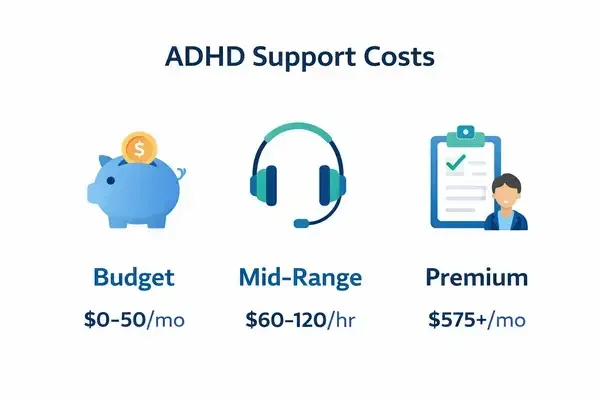
How Much Does ADHD Support for Teens Actually Cost?
The gap between general tutoring and specialized coaching is real. General tutors help with tonight's math homework. An experienced team that specializes in executive function coaching helps your teen build the systems they'll use for the rest of their life. Both have a place, but families who only invest in tutoring often wonder why their kid still can't manage their own workload.
What Happens If Teen ADHD Goes Untreated?
The data here is sobering. Untreated ADHD in teens leads to higher dropout rates, increased substance use, lower lifetime earnings, and higher rates of anxiety and depression in adulthood. CHADD's 2025 statement emphasized that early intervention is the single biggest predictor of long-term outcomes.
The most expensive mistake families make is waiting. I've seen it over and over. Parents assume their teen will "grow out of it" or that things will click once they mature. CDC research suggests ADHD doesn't just disappear for most people. Between 50–80% of children with ADHD continue to meet diagnostic criteria into adulthood. The teens who do best are the ones who get support early and consistently.
Actually, let me reframe that. It's not just about "getting support." It's about getting the right combination of support. Medication without coaching is half a solution. Accommodations without skill-building create dependence. The families who see lasting change are the ones who invest in all three.

How Can Parents Support a Teenager With ADHD?
Drop the lectures. Seriously. By the time your kid is 14, they've heard "just try harder" a thousand times. It doesn't work, and it damages the relationship. Instead, focus on creating systems together. Use shared calendars. Build morning and evening routines that reduce decision-making. Set up a dedicated study space with zero distractions.
A few specific things that I've seen make a difference:
1. Pick your battles. Not every missed chore needs a confrontation. Focus your energy on the two or three habits that matter most right now.
2. Praise the process, not just the grade. When your teen uses their planner without being reminded, acknowledge it. When they start homework before 10pm, say something.
3. Stay involved without hovering. Know what assignments are due. Check the grade portal weekly. But let your teen own the process as much as possible.
4. Get professional support. A good executive function coach or therapist who understands ADHD can do things that parents can't, simply because they're not the parent.
ADHD in teens is a long game. There's no quick fix, no single intervention that solves everything. But with the right support, the right structure, and a willingness to adjust the plan as your teen grows, most kids with ADHD can build a life they're proud of. The parents who get this right are the ones who stop trying to fix their kid and start learning how their kid's brain works.
Frequently Asked Questions About ADHD in Teens
How common is ADHD in teenagers?
About 15.5% of U.S. adolescents ages 12–17 have received an ADHD diagnosis, according to 2024 CDC data. That translates to roughly 4 million teens. Rates have risen slightly over the past decade due to better recognition, not overdiagnosis.
Can my teen succeed in school with a 504 plan instead of an IEP?
It's possible, but riskier. A 504 plan provides accommodations like extra test time and preferential seating, but no specialized instruction or dedicated funding. If grades are dropping despite accommodations, request a full IEP evaluation. CDC data shows 30.1% of teens with current ADHD receive no treatment at all.
Does social media make ADHD symptoms worse in teens?
Research points to yes. A January 2026 AAP policy statement found that greater digital media use correlates with increased ADHD symptoms over time. Teens with ADHD are especially drawn to the constant stimulation of social media, which can worsen attention and impulse control.
How much does executive function coaching cost for a teenager with ADHD?
Specialized ADHD coaching runs $75–$150 per hour, or roughly $575 per month for a weekly 50-minute session (2025–2026 rates). General academic tutoring is cheaper ($30–$60/hour) but doesn't build the organizational and planning skills that ADHD impairs.
What happens if ADHD goes untreated through the teen years?
Untreated teen ADHD is linked to higher dropout rates, earlier substance use, lower lifetime earnings, and increased rates of anxiety and depression. Excess annual costs average $8,349 per teen, with academic support making up nearly half. Early, consistent treatment is the strongest predictor of better long-term outcomes.
Are ADHD teens more likely to have other mental health conditions?
Yes, and by a wide margin. CDC data from 2024 shows 77.9% of children with ADHD have at least one co-occurring condition. The most common include anxiety (39.1%), behavior or conduct problems (44.1%), and learning disorders. Getting a complete evaluation matters because co-occurring conditions change the treatment approach.
Is ADHD medication enough to help my teen in school?
Usually not on its own. Medication reduces core symptoms like inattention and impulsivity, but it doesn't teach time management, organization, or planning skills. Only 44.4% of children with ADHD received behavioral treatment in the past year, per 2024 CDC data. Combining medication with executive function coaching and school accommodations produces the best results.