
Executive Function Coach Mexico City
The Ladder Method has run executive function coaching since 2008. In-person coaching operates in Los Angeles, New York, Chicago, Dallas and Austin. Mexico City is served online.
Pointed at Mexico City, the English phrase retrieves coaching ejecutivo: leadership coaching for directors and C-suite. Same two awords, different job.
Search it and you get firms selling executive-presence work to companies. One 2026 guide to CEO coaching in Mexico, updated in April, puts a full engagement at $25,000 to $120,000 MXN. Real service, real price. It has nothing to do with working memory or getting a task started.
US articles do warn you that "executive" in "executive function" means the brain's control system rather than a job title. None of them warn you that the same phrase, aimed at this city, returns the other profession entirely.
| If You Search This | You Get | Search This Instead |
|---|---|---|
| Executive function coach | Leadership coaching for company directors | Coach TDAH |
| Executive coaching | Corporate leadership programs | Coaching para funciones ejecutivas |
| ADHD coach | Mostly English-language US results | Reforzamiento de las funciones ejecutivas |
| Executive function testing | US test batteries | Evaluación neuropsicológica de funciones ejecutivas |
| Learning specialist | Tutoring | Neuropsicólogo clínico TDAH |
The Three-Job Split: Decide What You Are Buying Before You Buy It
Most people hire the wrong professional because they treat one problem as one purchase. In Mexico City this work splits into three jobs, and three different people do them.
Systems and accountability
Planners, time-blocking, task initiation, a weekly structure, someone who checks that Monday actually started. That is coaching. Not clinical, no license required. It is what we do.
Diagnosis and documentation
A formal profile, a report, a letter a school or an employer will accept. That is a clinical neuropsychologist. In Mexico it means a cédula profesional.
Medication
A prescriber, meaning a psychiatrist.
Buying one to do another is the mistake people make most often in this category. A coach cannot write you a report. A neuropsychologist will not text you on Tuesday to check whether you opened the document. A psychiatrist does neither.
The Order That Works. If a school or an employer needs paper, get the evaluation first, then build coaching against the profile it produces. If nobody needs paper and the problem is follow-through, start with coaching and add clinical support only if it stalls. The line between coaching and clinical work is drawn in more detail in how coaching differs from therapy.

What A Local Clinical Appointment Actually Looks Like
If you go the clinical route in Mexico City, the appointment is structured differently from a weekly US coaching session, and knowing the shape of it saves you a wasted booking.
ProyectoDAH, an ADHD organization at Progreso #9, Colonia Santa Catarina, Coyoacán, publishes its model. They see children from 4 to 17 and adults from 18. A first appointment runs 90 minutes. Follow-ups run 60. The work is multimodal: diagnostic evaluation and psychological treatment, with referral out to a specialist when one is needed.
Read that against what we do and the difference is obvious. Theirs is an assessment and a treatment plan, delivered in a clinic, in Spanish. Ours is a weekly session by video, in English, about the systems you use between appointments. Most people who write to us need one of those and think they need the other.
The Test They Will Run Is Not The Test US Articles Name
US guides tell you to ask for BRIEF-2 or D-KEFS. Ask for those here and you may get a blank look.
The instrument used in Mexico is BANFE-3, the Batería Neuropsicológica de Funciones Ejecutivas y Lóbulos Frontales, by Flores Lázaro, Ostrosky Shejet and Lozano Gutiérrez, third edition.
What it is:
Ages 6 to 90.
15 executive function processes.
Scored into three prefrontal areas: orbitofrontal, prefrontal anterior, and dorsolateral.
Restricted. Only qualified professionals can buy or administer it.
Why that matters to you and not to the article you read last night: a BANFE-3 profile may not slot cleanly into a US college disability office, and a US battery may not satisfy a Mexican school. Ask which instrument the clinician uses, and ask before you book, because the answer decides whether the report does the job you wanted it for.
We do not administer BANFE-3. We read one. Bring us a profile and the coaching plan is built from it.
In Mexico City This Work Is Often Done By A Licensed Clinician
In the United States anyone can call themselves an executive function coach, so the credential question is which certification they hold.
Here the question changes. Providers selling reforzamiento de las funciones ejecutivas on the Mexican listing platforms are frequently psychologists and neuropsychologists holding a cédula profesional. That is a licensed clinical market, not a coaching market.
So change your screening questions. Send these 6 by WhatsApp before you book anything:
What is your cédula profesional number?
Where did you train, and was it a clinical neuropsychology residency?
How many hours have you worked specifically with ADHD?
Do you administer BANFE-3, a US battery, or neither?
Will your report be accepted by this school, or by that US college disability office? Name the institution when you ask.
Do you work in English without an interpreter?
Public pages in this market lag reality. City, language and availability are the three things most likely to be out of date, and all three take one message to confirm.
Meet Noah Donner Klein
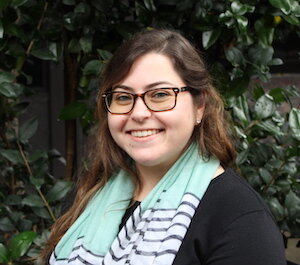
Noah started with us in spring 2019. He graduated from USC and started work one month after finishing his degree.
What We Do Not Do
We are a US company. We coach in English, online. That is the offer. Here is where it stops:
We do not diagnose. Nothing we run is a diagnosis, and we will not write a letter pretending otherwise.
We do not prescribe and we do not advise on medication. That belongs to a psychiatrist. ADHD stimulants in Mexico are prescription-controlled, so confirm the current rules with a Mexican prescriber rather than assuming your US arrangement carries over.
We have no office in Mexico City. Our in-person coaching runs in Los Angeles, New York, Chicago, Dallas and Austin. For Mexico City, every session is video.
We do not coach in Spanish. If the person being coached is stronger in Spanish, hire a Spanish-speaking coach. We will tell you that on the call.
We do not replace the local clinical layer. If you need a report a Mexican school will accept, you need a clinician here, not us.
We went looking for an English-speaking, in-person, US-style executive function coach with a public Mexico City office. We did not find one. That absence is why the split above exists, and why we tell you to buy the clinical half from someone else.
The 12 Skills We Work On
The Ladder Method started with 8 to 12 core skills and now covers more than 35. These 12 are where most people arrive.
| Skill | What Breaks | What It Looks Like at Home |
|---|---|---|
| Organization | No system for where things live | Homework loose in a backpack, keys lost weekly |
| Time Management | Cannot estimate duration | Everything takes 3x longer than predicted |
| Working Memory | Information falls out mid-task | Instructions repeated 4 times, still gone |
| Self-Monitoring | No read on own performance | Real surprise at a bad grade |
| Planning | Cannot sequence a project | Stares at a term paper for a week |
| Focus and Attention | Cannot hold or switch attention | Interrupts with unrelated topics |
| Task Initiation | Cannot start without a prompt | Waits to be told, every time |
| Emotional Regulation | Reaction outruns the trigger | Feedback lands as an attack |
| Task Management | Cannot see the micro-steps | Knows the goal, not the first move |
| Meta-Cognition | No model of own learning | Rereads notes and calls it studying |
| Goal-Directed Persistence | Stops at the first wall | 6 projects at 80% |
| Flexibility | Change breaks the plan | A moved deadline derails the week |

Questions People Ask Us
Do I need a diagnosis before we start?
No. Coaching works on behavior, not on a label. But if a school or an employer is going to want paper, get the evaluation first, because the report shapes the plan and doing it second means redoing work.
Will a Mexican evaluation be accepted by a US university?
Ask the university by name before you book the report. BANFE-3 is a Mexican instrument. Some US disability offices take it, some want a US battery. There is no universal answer and anyone who gives you one is guessing.
Do you coach in Spanish?
No. English only. If Spanish is the stronger language for the person being coached, hire a Spanish-speaking coach.
How does the time difference work?
Mexico City runs on the same clock as US Central time for most of the year, which puts an after-school session inside US working hours.
Is coaching a substitute for medication?
No, and we will not present it as one. For children 6 and older, the CDC describes the recommendation as medication and behavior therapy together. Coaching is a behavioral support. Medication decisions belong with a prescriber.
We already see a psychologist in CDMX. Does this overlap?
Usually not. A psychologist works on processing. We work on Monday morning. Plenty of clients run both, and we will coordinate if you want us to.
My child is at an international school here. Does that change anything?
It changes who needs the paperwork. Ask the learning support office which reports they accept before you book any evaluation, because that answer decides whether you need a Mexican clinician, a US one, or neither.
What happens on the 20-minute call?
We work out which of the three jobs you are trying to buy. If it is coaching, we explain how the program runs. If it is a diagnosis or a prescription, we say so and point you at the right kind of professional here.
Read Articles about Executive Functioning Skills





How-are-executive-functioning-skills-different-from-study-skills? Executive functioning are cognitive processes that enables us to plan, focus attention, remember instructions, and juggle multiple tasks successfully. While study skills are….