
Understanding ADHD Triggers And How To Cope
ADHD triggers are specific factors that make existing ADHD symptoms worse, not causes of ADHD itself. Understanding your personal ADHD triggers helps you manage symptoms more effectively and improve daily functioning. Common ADHD triggers include poor sleep, chronic stress, sensory overload, irregular routines, certain foods, excessive screen time, and co-occurring mental health conditions. While ADHD is a genetic neurodevelopmental condition that appears in childhood, these triggers can intensify symptoms like emotional dysregulation, impulsivity, forgetfulness, and difficulty focusing. Identifying your unique triggers through pattern tracking and self-awareness allows you to create prevention strategies and accommodations. This guide explains what worsens ADHD symptoms, how to recognize your personal triggers, and proven methods to manage them through lifestyle adjustments, workplace accommodations, and consistent treatment. Learning to avoid or accommodate your ADHD triggers reduces daily disruptions and helps maintain better symptom control.
Key Takeaways:
ADHD triggers worsen existing symptoms but don't cause ADHD initially.
Sleep deprivation and chronic stress are two major ADHD symptom triggers.
Sensory overload from bright lights, loud noises, and strong smells intensifies ADHD symptoms.
Irregular routines and skipping meals can significantly worsen ADHD symptoms.
Artificial food coloring and excessive screen time may increase hyperactivity and inattention.
Track your patterns using journals or apps to identify personal triggers.
Request workplace or school accommodations to manage triggering situations effectively.
Continue ADHD treatment consistently even when symptoms improve.
Small routine adjustments like quiet time and noise-canceling headphones help prevent trigger responses.
Co-occurring mental health conditions like depression can worsen ADHD symptom management.

What Makes Your ADHD Symptoms Worse?
Living with ADHD means some days feel harder than others. You might notice this pattern in your daily life. Remember, triggers don't create ADHD initially. ADHD is a neurodevelopmental condition. This means it stays with you throughout life. It doesn't appear and disappear randomly. However, certain triggers make your symptoms show up more intensely than normal.
Here's what happens when you encounter an ADHD trigger:
Managing your emotions becomes significantly harder
Your focus gets disrupted more easily
You lose track of time much more often
Forgetting important things happens more frequently
Your impulsive behaviors increase noticeably
Recognize these common triggers that intensify ADHD symptoms:
Not Getting Enough Sleep
Sleep quality directly impacts your ADHD symptoms. Poor sleep leaves you feeling foggy and irritable. You'll struggle with emotional regulation the next day. This makes managing your ADHD significantly more difficult. ADHD also disrupts your ability to fall asleep. Staying asleep becomes harder too. This creates a frustrating cycle you need to break.
Experiencing High Stress Levels
Chronic stress damages every part of your health. It also triggers worse ADHD symptoms. Notice how stress affects your focus and memory. You feel less focused under pressure. Forgetting things happens more often. Your emotions become harder to regulate. Don't blame yourself for these reactions. Your nervous system is simply signaling it's overwhelmed. Recognize this as a biological response, not a personal weakness.
Too Much Sensory Input
Research confirms people with ADHD experience heightened sensory sensitivity. This affects all your senses. Environments with excessive sensory input overwhelm you quickly. Bright lights trigger this response. Loud noises do too. Strong smells create the same effect. Overstimulation makes regulating emotions extremely difficult. Your ability to focus decreases significantly. Recognize these sensory triggers in your environment. Take action to reduce their impact.
Breaking Your Daily Routine
Maintain a consistent routine to manage ADHD effectively. This helps stabilize your symptoms daily. Go to sleep at the same time nightly. Wake up at consistent times too. Eat three nutritious meals every day. Take your medication on schedule without skipping doses. When your routine gets disrupted, notice what happens. Your ADHD symptoms become noticeably stronger. Protect your routine to protect your wellbeing.
Foods That Worsen Symptoms
Food doesn't cause ADHD itself. However, research proves certain ingredients increase ADHD symptoms. Hyperactivity can spike after eating specific foods. Artificial food coloring is one example. It doesn't create ADHD. But it increases inattention and impulsivity in some children. Pay attention to your body's responses. Notice which foods make your symptoms stronger. Track your eating patterns. Identify your personal food triggers.
Excessive Screen Time
Studies confirm excessive screen time links directly to ADHD. Social media doesn't cause ADHD initially. However, people with ADHD are vulnerable to doomscrolling. You lose track of time easily. Hours pass without you noticing. Constant phone use worsens your symptoms significantly. You get trapped in overstimulation cycles. Distraction becomes your default state. Set screen time limits now. Break this damaging pattern.
Other Mental Health Conditions Getting Worse
Many people with ADHD have additional mental health conditions. Research shows people with ADHD face three times higher depression risk. When your other conditions flare up, notice what happens. Managing your ADHD becomes significantly harder. Your symptoms intensify. Monitor all your mental health conditions. Address them together, not separately.
Learn to Identify Your Personal Triggers
Start by learning how to recognize your triggers. This is your first step toward better management. We've covered common ADHD triggers above. However, you likely have unique triggers too. These are specific to your situation. Your symptoms might spike during boring projects. Skipping breakfast could trigger symptoms. Notice your individual patterns carefully.
Understanding your triggers won't eliminate ADHD completely. ADHD is a neurodevelopmental condition. It permanently affects how your brain functions. Trigger awareness prepares you instead. You'll know when symptoms might intensify. This knowledge helps you plan ahead.
Pay close attention to your daily patterns. Notice when symptoms feel worse. Certain times of day might trigger you. Specific places could worsen symptoms. Particular situations may increase your struggles. Keep a detailed journal. Use an ADHD tracker app. Record what happened before each flare-up. Note your sleep quality. Track how your day started. Write down your emotional state. Document if you felt drained.
Self-awareness requires consistent practice. Stay tuned to your ADHD symptoms daily. The more you practice, the easier identification becomes. You'll spot problematic triggers faster. You'll recognize helpful strategies quicker.
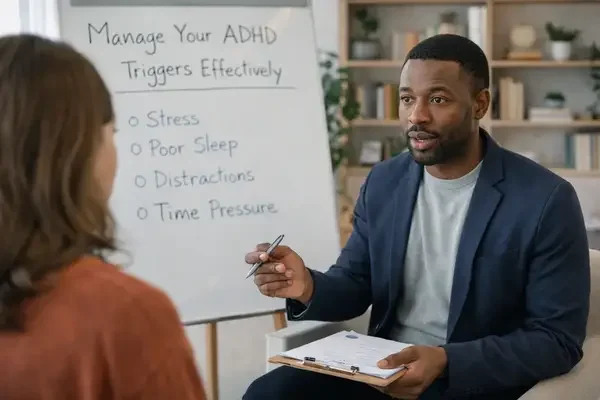
Manage Your ADHD Triggers Effectively
Identify your ADHD triggers first. Then take concrete steps to control them.
Build a Trigger-Prevention Plan
Start making intentional adjustments after identifying your triggers. Reduce their impact on your daily life. Cut back on foods that worsen symptoms. Build ten minutes of quiet time daily. This manages your stress levels. Use earplugs to block noise. Try noise-canceling headphones for sensory overload. Small routine changes create big improvements. Plan ahead for triggering situations. This gives you more control. You'll navigate challenges with greater confidence.
Request Workplace or School Accommodations
You're legally entitled to reasonable accommodations. ADHD qualifies you for support at work. Schools must provide accommodations too. These adjustments improve your daily functioning significantly. Request extended test-taking time. Ask for noise-reducing headphones. Negotiate flexible deadlines when needed. Take regular breaks throughout your day. Advocate for yourself confidently. These accommodations exist to help you succeed.
Continue Your ADHD Treatment Consistently
Don't stop treatment when symptoms improve. Well-managed symptoms don't mean you're cured. Skipping medication causes problems. Stopping therapy abruptly makes symptoms return stronger. Plan any treatment changes with your provider. Never make changes alone. Create a long-term plan together. This supports your continued success.
Conclusion
Managing ADHD triggers effectively transforms your daily life significantly. Start identifying your personal triggers today. Track your patterns consistently using journals or apps. Notice what makes your symptoms worse. Create a prevention plan based on your findings. Request accommodations at work or school. Never skip your ADHD treatment plan. Small adjustments create meaningful improvements over time.
Remember that understanding triggers takes practice and patience. You won't identify everything immediately. Give yourself time to learn your patterns. Build strategies that work specifically for you. The Ladder Method emphasizes taking small, manageable steps toward better ADHD management. Apply this approach to trigger identification too. Start with one trigger at a time. Master managing it before moving forward. This prevents overwhelm and builds lasting success.
Take control of your ADHD triggers now. Your future self will thank you. Better symptom management starts with action today.
FAQs
Can ADHD triggers cause permanent damage to my brain?
No, ADHD triggers don't cause permanent brain damage. They temporarily worsen your existing ADHD symptoms. Your symptoms return to baseline once you remove or manage the trigger.
How long does it take to identify all my ADHD triggers?
Trigger identification is an ongoing process that varies per person. Most people identify major triggers within three to six months of consistent tracking. New triggers may emerge as your life circumstances change.
Can I eliminate ADHD symptoms completely by avoiding all triggers?
No, avoiding triggers won't eliminate ADHD completely. ADHD is a neurodevelopmental condition that stays with you permanently. Managing triggers helps reduce symptom intensity and improves daily functioning.
Do children and adults have different ADHD triggers?
Yes, triggers can vary between children and adults. Children often struggle more with food triggers and routine disruptions. Adults typically face more stress-related and work-environment triggers.
Should I stop my ADHD medication if I manage triggers well?
Never stop medication without consulting your healthcare provider first. Well-managed symptoms don't mean you no longer need treatment. Your provider will help create a safe adjustment plan if needed.