Stop Reminding Yourself About Everything, All Day (Adult Edition)
Fall Independence Series
Stop Reminding Yourself About Everything, All Day
By Candice Lapin, Founder & CEO, The Ladder Method
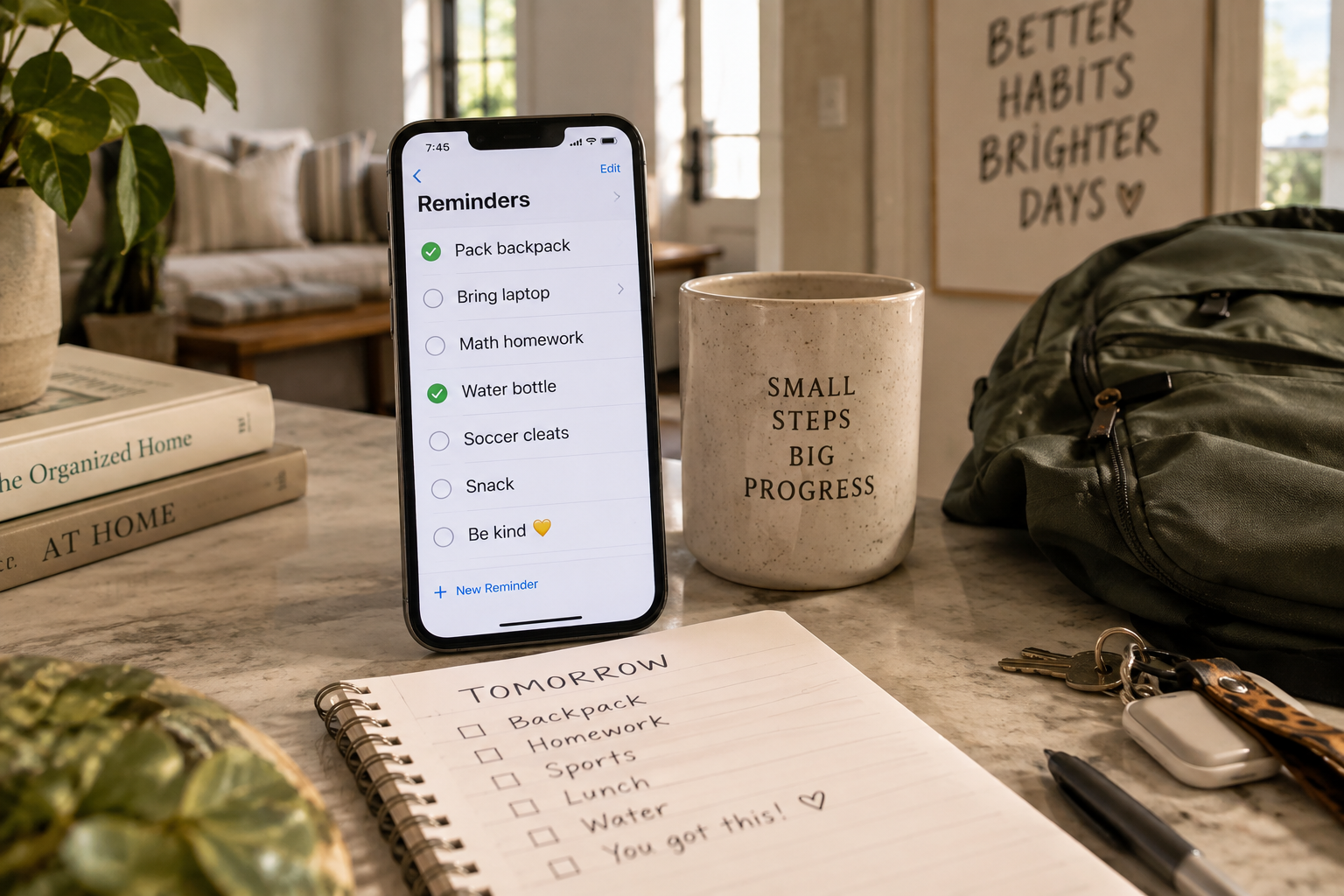
If your phone, your fridge, and three different apps are all reminding you about the same handful of things, you're not disorganized — you're just relying on the wrong tool. Reminders were built to interrupt you. They were never built to help you plan.
It's an easy trap to fall into. Something slips once, so you add a reminder. Then something else slips, so you add another. A few months in, you have a system made entirely of alarms and sticky notes, and somehow you're still forgetting things — just with more noise attached to the forgetting.
Why Reminders Alone Stop Working
We teach adults at The Ladder Method that a reminder and a plan are two different things, even though they get treated as interchangeable. A reminder tells you something exists. It doesn't tell you when you're actually going to deal with it, or what needs to happen first. Stack enough of them up and you get noise, not a system.
- Working memory fills up fast. Between meetings, kids' schedules, and your own commitments, holding it all in your head guarantees something slips — usually the thing you were “sure” you'd remember.
- Every alert is a small tax on your attention. Each ping pulls you out of whatever you're doing, even for a few seconds, and those seconds add up across a full day.
- Time blindness doesn't go away with age. A reminder firing at 4pm doesn't help if you already believed, an hour earlier, that you had more room in the day than you did.
And here's the part that's easy to miss: as an adult, you're both the person setting expectations and the person meeting them. Nobody's handing you a schedule anymore — which is exactly why one predictable check-in carries more weight than it used to, not less.
The Goal Isn't Fewer Responsibilities
The goal isn't to somehow have less on your plate. It's to build one reliable moment a day where you actually look at what's ahead, instead of finding out about it one ping at a time. One predictable check-in does more for your follow-through than a dozen scattered alerts ever will.
Build Your Check-In Today
You don't need a new app or a total overhaul of how you organize your life. You need one protected window, five to ten minutes, and a little honesty about what's actually in front of you.
- Pick one time today you can protect for 5–10 minutes — after you close your laptop, or right before dinner prep.
- Look at what's actually due or needed in the next 24–48 hours, across work and home.
- Name the one thing you'll do first tomorrow morning.
- Delete any reminder that isn't tied to a fixed time — keep the ones for real appointments, drop the “just in case” ones.
Attach this check-in to something that already happens daily — right after you shut your laptop, or while the coffee brews. Use that moment as the cue, rather than adding one more app notification to remind you to stop relying on notifications.
When the Day Gets Away From You Anyway
Some days the check-in won't happen, and that's not a sign the system has failed. It's worth having a script ready for exactly that moment:
“Missing one day doesn't undo the system. I'll pick it back up tomorrow.”
The goal was never a perfect streak. It's a habit reliable enough that missing a day doesn't quietly turn into missing a month.
If It Keeps Slipping, Make It Smaller
If you can't find a consistent time of day, anchor the check-in to an action instead of a clock time — right after you park the car, right after the last work call. If you do the check-in and still forget things afterward, keep it to reviewing and picking one task, not solving everything in the moment. And if your reminders are actually other people — a partner, a team — that's a different kind of system, and it's fine, as long as at least one list lives somewhere other than someone else's memory.
This Isn't About Never Forgetting Again
You'll still forget something eventually — that's not the bar. The goal isn't fewer things to do. It's not needing twelve alarms to trust that you'll do them. A short, reliable check-in beats a day built entirely around pings.
If this is useful, forward it to someone who'd appreciate it — a friend, a partner, anyone tired of running on reminders. A family member navigating high school might also benefit from what we do at The Ladder Method.
Visit The Ladder MethodP.S. The goal isn't fewer things to do. It's not needing twelve alarms to trust that you'll do them.