
How to Reduce Reminders Without Everything Falling Apart
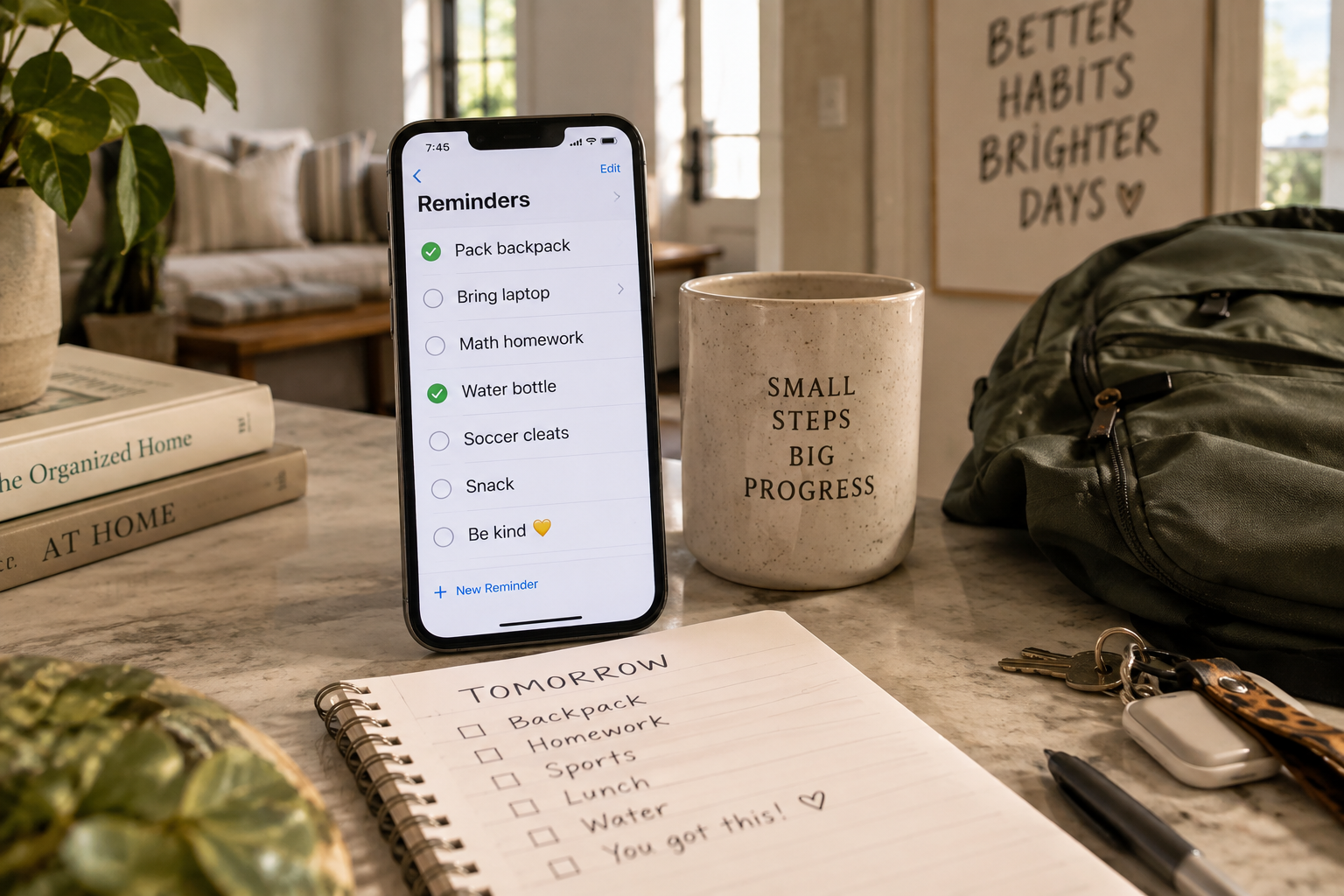
Summer Independence Series
How to Reduce Reminders Without Everything Falling Apart
By Candice Lapin, Founder & CEO, The Ladder Method
One of the most common frustrations families describe during the summer sounds something like this:
“I feel like I have to remind them about everything.”
Parents often become the external memory system for the entire household.
Reminders about:
- chores
- summer assignments
- appointments
- texting back
- waking up
- responsibilities
- transitions
At first, reminders feel helpful.
And sometimes they are.
But over time, repeated prompting can create an exhausting cycle:
- parents feel resentful
- students tune reminders out
- tension builds quickly
- nobody feels successful
The goal is not to remove support entirely.
The goal is to shift from constant reminders toward more sustainable systems.
Why Constant Reminders Stop Working
Many students who struggle with executive functioning genuinely do forget tasks.
This is not usually intentional.
But when reminders happen constantly throughout the day, something important happens:
The parent becomes responsible for holding the task.
The student begins relying on external prompting instead of building internal awareness.
Over time, reminders can unintentionally:
- increase dependency
- create emotional friction
- reduce ownership
- turn every interaction into task management
That dynamic becomes exhausting for everyone.
The Shift: Predictable Check-Ins
One of the most effective alternatives to constant reminders is a scheduled check-in.
Instead of prompting all day long, families create one predictable time to:
- review responsibilities
- problem-solve obstacles
- adjust plans
- reset expectations
This changes the emotional tone dramatically.
The structure becomes predictable.
And predictability reduces friction.
What Scheduled Check-Ins Can Look Like
Check-ins do not need to be long.
In many cases, 5–10 minutes is enough.
Examples:
- 11 AM planning check-in
- afternoon work reset
- evening preview for tomorrow
- Sunday weekly planning session
The key is consistency.
Not intensity.
How to Transition Away From Constant Reminders
This shift usually works best gradually.
If reminders have been happening all day long, moving immediately to zero support often backfires.
Instead:
Step 1. Choose one predictable check-in time.
Step 2. Begin redirecting reminders back to that check-in. For example: “We'll talk about that during our 4 PM check-in.”
Step 3. Use the check-in to support planning—not lecture. Try asking:
- “What still needs to get done?”
- “What's your plan?”
- “What support would help?”
This builds self-monitoring skills over time.
Common Mistakes
Mistake #1: Turning the Check-In Into a Criticism Session. If every check-in becomes emotionally loaded, students will begin avoiding them. The goal is collaborative problem-solving. Not punishment.
Mistake #2: Expecting Immediate Consistency. Executive functioning growth is rarely linear. Students will forget things. Systems will need adjusting. That is part of the learning process.
Mistake #3: Removing All Support Too Quickly. Students who rely heavily on reminders often need gradual transitions. Support should fade over time. Not disappear overnight.
Helpful Scripts
“I don't want to remind you all day. Let's create one time to reset and plan instead.”
Or:
“I'm trying to help us move away from constant reminders and toward a system we can both rely on.”
Or:
“What would help you remember this more independently?”
Final Thoughts
The expectation should be gradual improvement over time.
The goal is reducing tension while gradually building ownership.
A predictable system almost always works better than constant prompting.
Consistency matters more than getting every step exactly right.
Want help building sustainable systems for reminders, routines, and follow-through? Sign up for a free Executive Function consultation with The Ladder Method.
Schedule a Free EF ConsultationOr explore more executive functioning resources for families at TheLadderMethod.com.
P.S. Consistency matters more than getting every step exactly right.