
Creating An ADHD-Friendly Home Environment
Creating An ADHD-Friendly Home Environment
An ADHD-friendly home environment is one where the physical setup does the remembering, so the person with ADHD doesn't have to. Fewer objects on flat surfaces. One home for every item that leaves the house daily. Separate zones for work and rest. No controlled trial has measured how far a home redesign moves an ADHD symptom score, so any article quoting a precise percentage for that invented it.
What is an ADHD-friendly home environment? It's a living space arranged so focus doesn't depend on memory or willpower. Clear surfaces cut visual competition. Single-purpose zones make transitions obvious. Fixed daily anchor times remove dozens of small decisions before they get made. The room carries load that executive function would otherwise carry alone.
The closest thing to a hard number comes from a classroom. Anna Fisher, Karrie Godwin and Howard Seltman ran 24 kindergarteners through the same 6 lessons in 2 rooms. In the decorated room, children spent 38.6% of instructional time off task. In the sparse room, 28.4%. Accuracy went the other way, 42% against 55%. Their study was published in Psychological Science in 2014.
Those were typically developing 5-year-olds, not children with a diagnosis, and the numbers won't transfer cleanly to an ADHD brain in a kitchen. Nobody has run that study. What we have is 10 years of houses, where roughly 70% of our families are neurodivergent. Strip a room and the change shows up that week, which is why we pair it with structured coaching support.
Key Takeaways:
Clear the flat surfaces first. In the one controlled study we have, sparse walls cut off-task time from 38.6% to 28.4%
Give each area one job. Work, play and rest in separate zones, so transitions get a physical signal
Make the system visible. Labels, color codes and posted schedules move the plan out of working memory
Anchor the day with fixed times. Same wake, same dinner, same wind-down
Turn the volume down. Softer lighting and less background noise cut what the brain has to filter
Keep one space boring on purpose. A low-demand retreat is where emotional regulation gets easier
Reinforce fast and specifically. Naming the behavior within seconds beats correcting it an hour later
Where To Start With An ADHD-Friendly Home
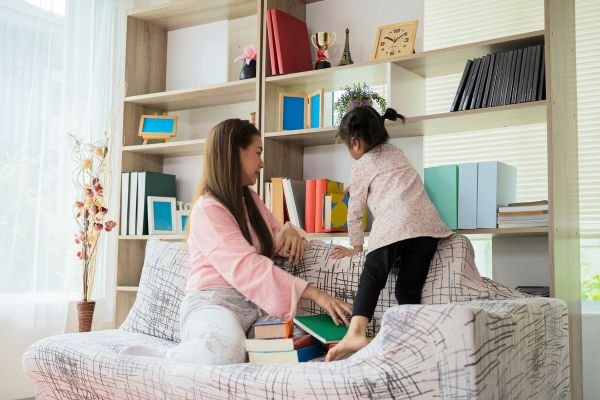
Start by deciding what leaves the house. Most families start by buying storage, and that's the wrong end of the job. Bins bought before decisions get made only relocate the pile and put a lid on it.
Pick the room where the person with ADHD spends the most waking hours. Clear every horizontal surface, then put back only what gets used there. Whatever's left over needs a decision, not a container. Buy storage after that.
Two things this article won't cover. Medication and diagnosis, which belong with a clinician. And school accommodations, since a 504 plan is a separate process. What's here is the part you control from inside your own house, and it's what makes executive function coaching land faster.
How Your Home Affects ADHD Symptoms
Your home either supplies structure or demands it. A room full of competing signals asks an already stretched system to do more work, and that holds at every age.
Think about what a cluttered counter asks of someone. Every object on it is a small open question: does this need doing, is this mine, did I forget something here. Clearing it doesn't make anyone smarter. It stops the room asking. That's why our coaching team starts with the environment.
Which Organization Strategies Actually Work?
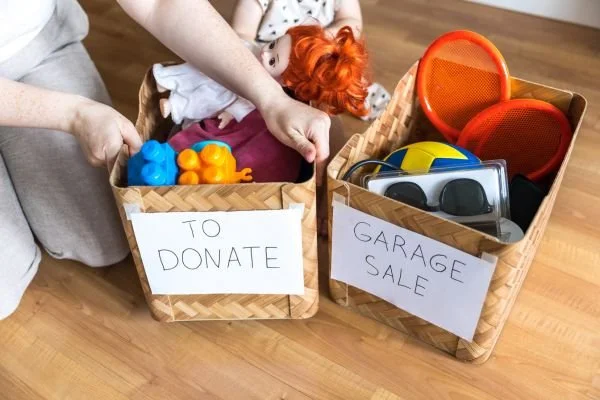
The ones that keep working on a bad day. That's the whole test. A system needing 20 minutes of daily upkeep and a good mood isn't a system, it's a hobby, and it gets abandoned inside a month.
Why Does Clutter Wreck Focus?
Because attention gets spent rejecting things, and rejection isn't free. Every item in view takes processing before the brain sets it aside. Put 40 items on a desk and that tax runs all day.
Three rules hold up. Anything used daily gets a home within arm's reach of where it's used, not where it belongs. Anything used monthly goes behind a door. Anything without a home is a decision you haven't made, and it migrates back to the counter until you do. Clear surfaces support the development of executive function skills instead of taxing them.
Do Activity Zones Really Help?
Yes, and here's where the advice falls apart. Zones work when you have rooms to spare. Homework at a desk, rest on the couch, play on the floor, and the body learns which room means which mode.
In a 1-bedroom apartment or a shared kids' room, that's useless, and most articles won't tell you so.
The small-space version uses one surface at different times with a physical switch. The kitchen table is a homework zone when the placemat comes off and the lamp goes on, a dinner table when the lamp goes off. That switch takes 15 seconds and does most of what a spare room would.
What Does Visual Organization Look Like?
It looks like the plan living on a wall instead of in someone's head. Labels on bins. A color for each subject. A weekly schedule posted where it gets seen without being looked for.
Color-coding sounds trivial until you watch it work. One middle schooler we coached couldn't hold his assignments together, and homework was a nightly argument. We gave him a color-coded planner and a visual weekly schedule. He went from C's to the honor roll, and what his parents noticed first was that he stopped asking what he was supposed to be doing.
Put the chart at the height of the person using it, not adult eye level. That's the difference between a chart that gets read and wall decoration.

Building Daily Routines That Hold
Routines convert decisions into defaults. Predictability lowers anxiety and leaves more energy for what needs it. Getting there is where most families stall, which is why routine-building sits at the center of The Ladder Method framework.
Maintain Consistent Schedules
Keep meals, tasks and sleep at the same times where you can. Consistency cuts decisions and conserves energy for the parts of the day that need it. But don't schedule the whole day. Pick 3 anchor times: wake, dinner and lights out. Everything between them can float.
Break Down Complex Tasks
Large tasks stall an ADHD brain before they start. Divide the job into small steps on a checklist where progress is visible. Ticking items off delivers an immediate payoff. Our coaches build task-breakdown systems around how a particular person works, since step size varies a lot.
Schedule Regular Breaks
Sustained focus drains anyone, and faster with ADHD. Build short breaks into homework and work sessions before they're needed. Movement breaks reset attention better than sitting ones, which is why they belong alongside study strategies that build self-awareness.
Creating Sensory Balance
Sensory load competes with attention for the same budget. Manage what the room puts out and there's more left for the task.
Control Sensory Input
Many people with ADHD run hot on sensory input. Turn down noise, harsh overhead lighting and strong smells. Softer lamps and quieter colors calm a room faster than any advice about willpower. Noise-canceling headphones earn their price.
Establish Quiet Retreat Spaces
Everyone needs somewhere to decompress. Build one low-demand space with soft textures, comfortable seating and nothing that asks anything. This is where emotional regulation gets practiced. It doesn't need to be a room. A corner with a chair and a blanket counts.
Provide Sensory Tools
Fidget tools channel excess energy instead of suppressing it. Stress balls, textured objects and things that move all do real work. They aren't distractions, whatever a classroom policy says. What works varies, so expect to try several.

Supporting Positive Development
How you respond to behavior shapes what happens next more than any storage system does. There's decent evidence for which parts matter, and the answer isn't where most parents put their effort. Our approach is built on evidence-based practice.
Reinforce Success Immediately
Praise the specific action, within seconds, and name what the person did rather than what they are. "You put your bag on the hook" beats "you're so organized."
Dekkers, Hornstra, van der Oord and colleagues pooled 29 studies covering 2,345 participants for a 2022 meta-analysis in the Journal of the American Academy of Child and Adolescent Psychiatry. Two components tracked with better outcomes: changing the antecedents of behavior, which is the technical name for everything this article calls home setup, and reinforcing the behavior you want. More psychoeducation, meaning more explaining of what ADHD is, showed a negative association with parental outcomes.
Read that again. Learning more about ADHD didn't help the parents in those studies. Changing the setup and the response did.
I'd push back on my own framing. Understanding ADHD does matter, especially right after a diagnosis, and it's how families stop reading behavior as defiance. But it's the entry fee, not the intervention. The families who see real change in student outcomes moved on to changing something physical.
Communicate Clear Expectations
Vague instructions fail everyone in the room. Say what you want specifically, the same way each time, and check it landed before the task starts. Consistency heads off the friction that gets mistaken for defiance. It also drives our coaching for adults and leadership teams.
Hand Over Responsibility Gradually
Independence is built by doing, not by being told. Hand over age-appropriate tasks and personal routines, stay available, and let the outcome belong to the person doing the work. Let small natural consequences teach where the stakes are low.
Moving Forward With Confidence
Do one room. Then live in it for 2 weeks before touching the next one.
Whole-house overhauls fail on schedule. Weekend 1 goes well, weekend 2 stalls, and by weekend 3 there are 4 half-finished rooms and a family that associates the project with resentment. One room finished beats 4 started, and it's the foundation home-based executive function support gets built on. Schools, therapists and families get further together, which is why we build partnerships across a student's support system.
Many families do better with outside accountability, and that's not a failure of effort. It's what our founder built this practice around. Some want someone in the room, which is where our in-person coaches by region come in. How our program differs from tutoring is the useful comparison. There's more in our executive function and ADHD articles.
Conclusion
Take the order of operations if you take nothing else. Decide what leaves the house, then clear the surfaces, then buy the storage. An ADHD-friendly home environment isn't a finished state you arrive at, it's a setup you keep adjusting, and the version that survives is always the simpler one. Start with a single room and 3 anchor times. When you want a second set of eyes, book a consultation with our team and we'll start with the room you use most.
FAQs
How long does it take to see improvements from ADHD-friendly home modifications?
Many families notice immediate benefits within the first week of implementing organizational and routine changes. Significant improvements in focus, emotional regulation, and task completion typically emerge within 2-4 weeks as new patterns become established. Building sustainable habits requires 6-8 weeks of consistent practice. Start with 2-3 changes rather than overhauling everything at once to prevent overwhelm.
Can adults with ADHD benefit from these home environment strategies?
Absolutely. These environmental modifications support ADHD management across all age groups. Adults often experience significant improvements in work productivity, daily routines, and emotional regulation through strategic home organization. The same principles apply: reduce clutter, create activity zones, establish consistent routines, and manage sensory input. Dedicated workspace organization and visual task management systems prove particularly beneficial for adults.
What's the most important change to make first in an ADHD home?
Start with decluttering and organizing high-traffic areas like the kitchen, bedroom, or main workspace. Clear surfaces reduce visual distractions by 50-70%, providing immediate benefits for focus and mental clarity. Choose one room where the person with ADHD spends significant time and implement a simple organizational system with designated storage. This creates a foundation for other changes and builds motivation quickly.
How do I maintain an organized, ADHD-friendly home long-term?
Maintenance requires simple, sustainable systems rather than perfection. Implement a "one-touch rule" where items go directly to their designated spots. Schedule brief 10-15 minute daily reset sessions. Use visual reminders and checklists for routine tasks. Make organizational systems easy to use, complicated systems won't be maintained. Regular weekly reviews help identify what's working and what needs adjustment.
What if other family members resist ADHD-friendly home changes?
Explain how these modifications benefit everyone, reduce clutter, clear routines, and organized spaces decrease stress for the entire household. Start with shared spaces and demonstrate positive results. Involve resistant family members in planning to increase buy-in. Compromise on personal spaces if they don't impact others. Most resistance fades once benefits become obvious through daily experience.